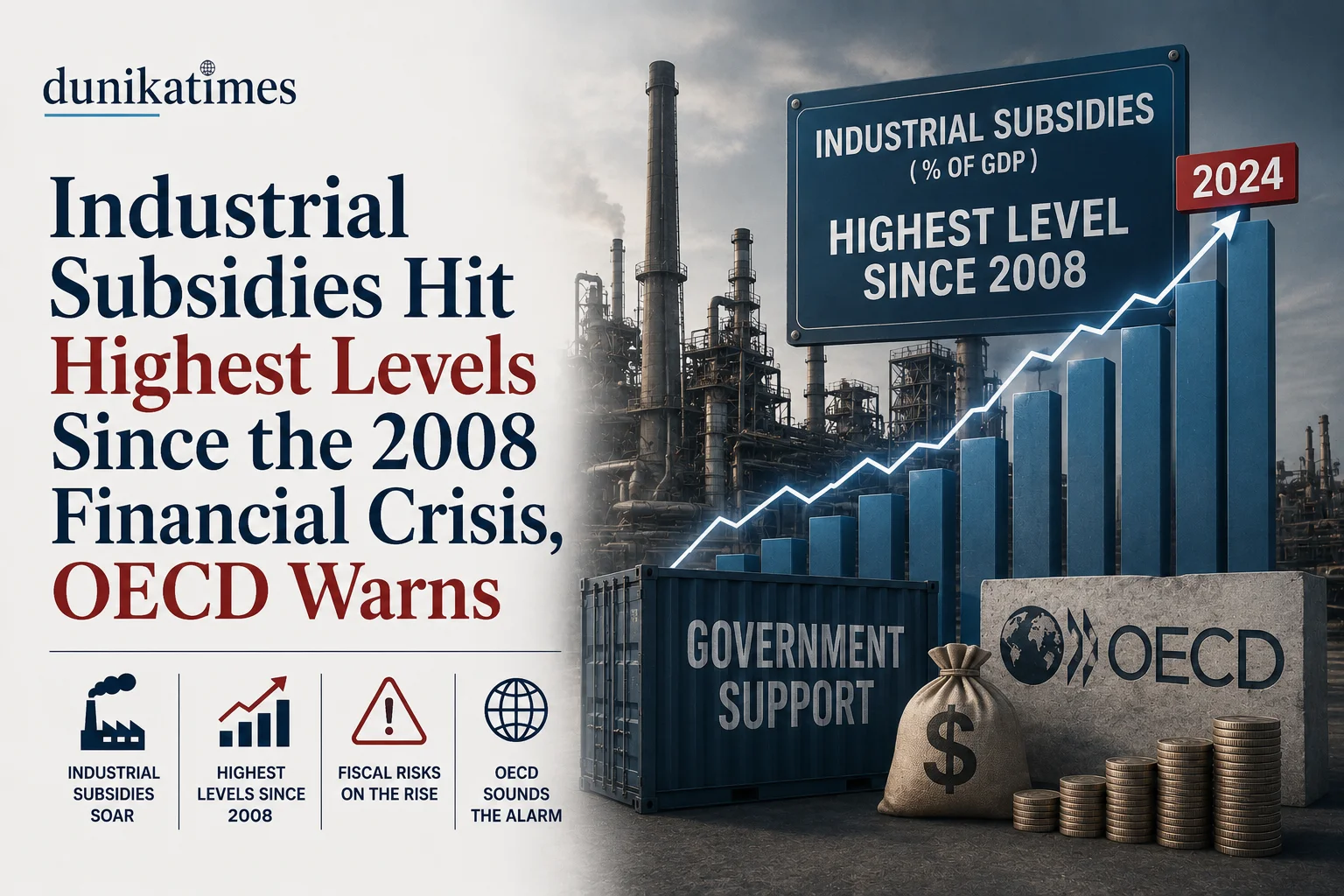
Paris: The era of open free-market capitalism is rapidly fading into an era of fierce government intervention. A new report from the Organisation for Economic Co-operation and Development (OECD) has revealed that industrial subsidies globally have reached their highest levels since the 2008 global financial crisis.
In a frantic race to dominate the industries of the future—specifically Artificial Intelligence, semiconductor manufacturing, and green energy—governments around the world are pouring unprecedented amounts of taxpayer money into domestic corporations.
🔴 The Return of “State Capitalism”
While subsidies can boost domestic innovation, the OECD warns that this aggressive spending spree is severely distorting global competition and driving financial fragmentation.
- The Big Spenders: The United States, the European Union, and China are currently locked in a massive subsidy war. Policies aimed at “reshoring” critical supply chains are forcing multinational companies to choose sides, fundamentally altering how global trade operates.
- The Cost to Developing Nations: As wealthy nations use their massive budgets to artificially lower the cost of domestic manufacturing, emerging markets are being priced out of global supply chains. They simply cannot afford to match the billion-dollar tax breaks offered by Washington or Brussels.
- Inflationary Pressures: Funneling trillions into specific sectors is exacerbating global inflation, creating artificial labor shortages in tech and construction, and driving up the cost of raw materials globally.
DuniKa Times Takeaway: The global economy is fracturing into competing, state-sponsored industrial blocs. For international businesses, navigating this new landscape means survival will depend less on market efficiency and more on securing lucrative government grants and navigating complex new trade barriers.