Geneva: The era of seamless global free trade may be coming to a rapid end. According to a grim new analysis released this week by the World Economic Forum (WEF) and Oliver Wyman, a massive wave of new tariffs and trade restrictions implemented globally since the start of 2025 is already causing severe damage to the world economy.
After decades of driving for efficiency and open borders, major economies are increasingly pivoting toward protectionism. Driven by national security concerns and the desire to protect domestic industries, policymakers around the world have implemented the strictest trade and investment restrictions seen in recent decades.
🔴 The Heavy Cost of “Fragmentation”
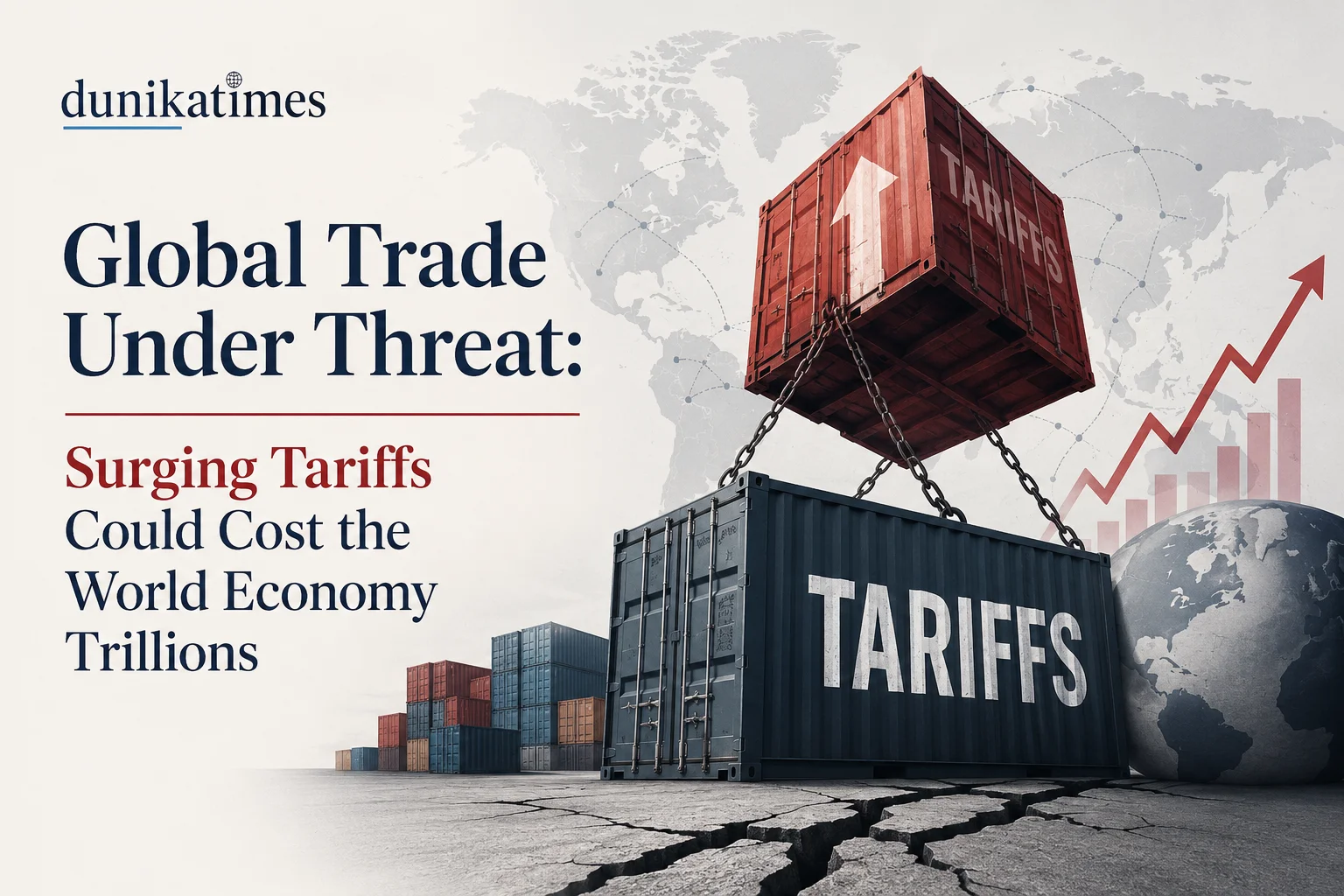
The newly published report warns that this financial “fragmentation” is not just a political issue—it has a massive economic price tag.
- Slowing Global Growth: Trade barriers already in place have curbed global economic growth by at least 0.2 percentage points. However, the WEF warns that if countries continue to retaliate with escalating tariffs, the resulting trade wars could slash global growth by a devastating 6.4 percentage points.
- Fueling Inflation: Tariffs act as a direct tax on consumers. As countries impose taxes on imported raw materials and finished goods, businesses are forced to pass those higher input costs onto buyers. The WEF estimates that worst-case tariff escalations could push global inflation up by an additional 6.1%.
- Shifting Supply Chains: The policies are already actively forcing production to shift. For instance, while higher import tariffs in the US have boosted domestic manufacturing output by 2.25%, the rising cost of materials has simultaneously caused a drop in US services demand. Meanwhile, manufacturing output in neutral countries is falling as their exports lose competitiveness.
🔴 A Difficult Path Forward
Experts caution that these restrictive trade policies are incredibly difficult to reverse once implemented. Because tariffs often create concentrated “winners” in domestic industries (like local manufacturers who no longer have to compete with cheap imports), unwinding them becomes politically toxic for governments.
DuniKa Times Takeaway: For international businesses and developing nations reliant on exports, the message is clear: the global commercial system is fracturing into distinct economic blocs. Companies must urgently rethink their supply chains, as the cost of cross-border trade is only expected to rise through 2026 and 2027.